How Much Truck Do You Actually Need for Towing in Colorado?
How Much Truck Do You Actually Need for Towing in Colorado?
If you are comparing a Colorado pickup for sale, the right question is not simply how much the truck can tow. The more useful question is how much truck your trailer, passengers, cargo, driving routes, and budget require in real life. Buyers researching truck sales in Colorado Springs often start with tow ratings, but payload, gross vehicle weight rating (GVWR), altitude, and frequency of use can matter just as much.
This guide explains how to match a used truck to your actual towing needs, whether you are pulling a utility trailer from Colorado Springs to Pueblo, taking a horse trailer toward Castle Rock, or climbing mountain grades on I-70. We will cover what you plan to tow, what you will haul in the truck, how often you will use it, and how to leave enough capacity for Colorado’s elevation and changing weather.
Start with the trailer, the cargo, and the roads you actually use
First, identify the trailer you expect to tow and its loaded weight, not only its empty or “dry” weight. A travel trailer may gain several hundred pounds from water, propane, food, clothing, tools, batteries, and outdoor equipment; a horse trailer may carry tack, feed, and other supplies; a landscaping or construction trailer may be loaded with compact equipment, lumber, or materials. The trailer’s gross vehicle weight rating, or trailer GVWR, gives you a more useful planning ceiling than an unloaded brochure figure.
Next, consider what goes inside the truck. Passengers, coolers, toolboxes, firewood, recovery gear, bicycles, and hitch equipment all count against the truck’s payload. If you are towing a conventional trailer, the tongue weight commonly represents about 10 to 15 percent of the loaded trailer weight, and that weight sits on the truck rather than behind it. A 7,000-pound loaded trailer may place approximately 700 to 1,050 pounds on the hitch, before adding passengers or cargo.
Finally, look at where and how often you tow. Occasional local trips on relatively moderate grades create different demands than weekly towing over Monument Hill, Highway 24, or long passes on I-70. A truck that feels adequate around Colorado Springs may work harder on a sustained climb near Vail or while descending a mountain grade with a loaded trailer. That difference should shape the amount of headroom you want in your numbers.
Towing capacity, payload, and GVWR answer different questions
Towing capacity describes the maximum trailer weight a specific truck configuration is rated to pull, but it does not tell the entire story. The rating can depend on the engine, transmission, axle ratio, cab and bed configuration, drivetrain, cooling system, tires, hitch equipment, and factory trailering package. Two trucks with the same model name may have different capacities, so use the specific vehicle’s door label, owner’s manual, and manufacturer documentation rather than relying on a general model range.
Payload: This is the maximum weight you can add to the truck, including passengers, cargo, accessories, and trailer tongue weight. Payload is often the first rating a travel trailer buyer reaches because the truck may have enough advertised towing capacity while running short on available weight over the rear axle.
GVWR: This is the maximum allowable weight of the fully loaded truck, including occupants, fuel, cargo, and tongue weight. If the truck itself exceeds GVWR, it is overloaded even if the trailer is below the advertised tow rating.
GCWR: Gross combined weight rating is the maximum combined weight of the truck, trailer, passengers, cargo, and equipment. It connects the truck’s loaded weight to the trailer’s loaded weight and helps confirm that the complete combination remains within the manufacturer’s limits.
Tongue weight: This is the portion of the trailer’s weight transferred to the hitch. It affects payload, GVWR, rear axle loading, suspension behavior, and steering response, so it cannot be treated as separate from the truck’s weight calculations.
A practical calculation starts with the trailer’s loaded weight, estimates tongue weight, adds every passenger and item carried in the truck, and compares that total with payload and GVWR. Then confirm that the loaded trailer remains below the truck’s tow rating and that the combined weight remains below GCWR. If any number is close, choosing a truck with more capacity is usually more useful than trying to reduce essential cargo.
Colorado altitude makes extra capacity useful
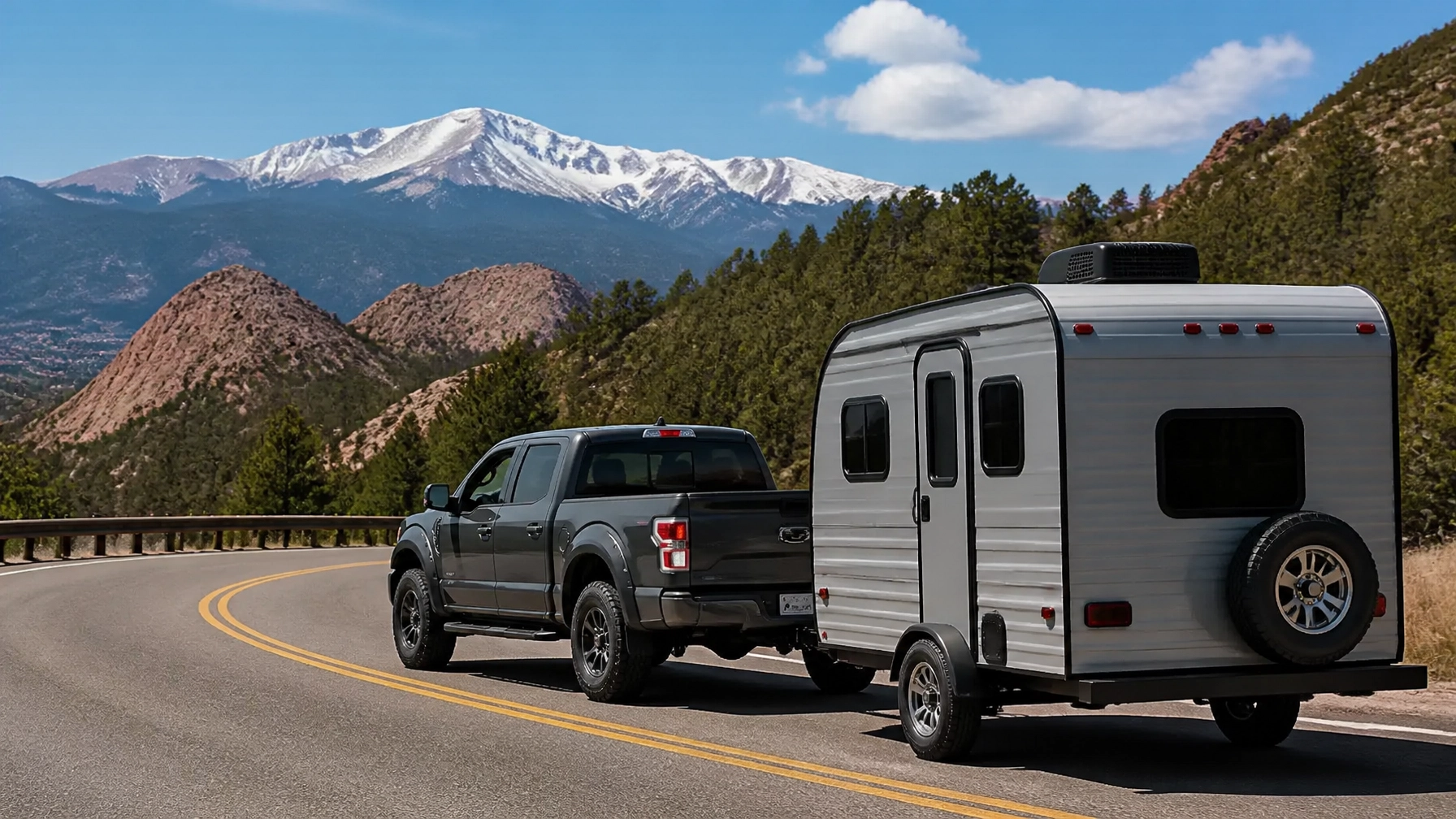
Colorado’s altitude changes how a truck feels under load. Thinner air can reduce the power available from naturally aspirated gasoline engines, while turbocharged gasoline engines and diesel engines typically maintain performance more effectively at elevation. Every engine still works hard when pulling a trailer up a long grade, and cooling systems, transmissions, brakes, and tires all become part of the towing equation.
A route across the plains is not the same as a climb on I-70 or a drive toward Pikes Peak. Extended grades require consistent engine output, while the descent places sustained demands on service brakes and engine braking. Tow-haul mode, trailer brakes, an integrated brake controller, proper sway control, and a weight-distribution hitch where appropriate can improve control, but equipment does not make an overloaded combination safe.
For regular mountain towing, it is reasonable to leave a margin below the truck’s maximum ratings rather than planning to operate at the limit. There is no universal percentage that applies to every truck and trailer, because loading, weather, road conditions, and vehicle condition vary; however, a setup that remains comfortably below its ratings will typically accelerate, cool, steer, and stop with less strain. If your calculation leaves only a small amount of payload for passengers and gear, a larger truck may be the more practical choice.
Match the truck class to your normal towing range
For lighter loads, a properly equipped midsize truck or SUV may be sufficient. Trailers under approximately 3,500 pounds loaded can include small utility trailers, lightweight boats, compact campers, and personal watercraft. The exact truck still needs enough payload for the tongue weight and occupants, and trailer brakes become increasingly important as weight and mountain grades increase.
The 4,000-to-6,000-pound range is where configuration matters more. Some midsize trucks with a factory trailering package can reach higher tow ratings, while lighter half-ton trucks may provide more stability, payload, cooling capacity, and braking reserve. A buyer who regularly travels from Colorado Springs to mountain destinations may prefer the half-ton’s additional margin even if a midsize truck technically meets the trailer’s listed weight.
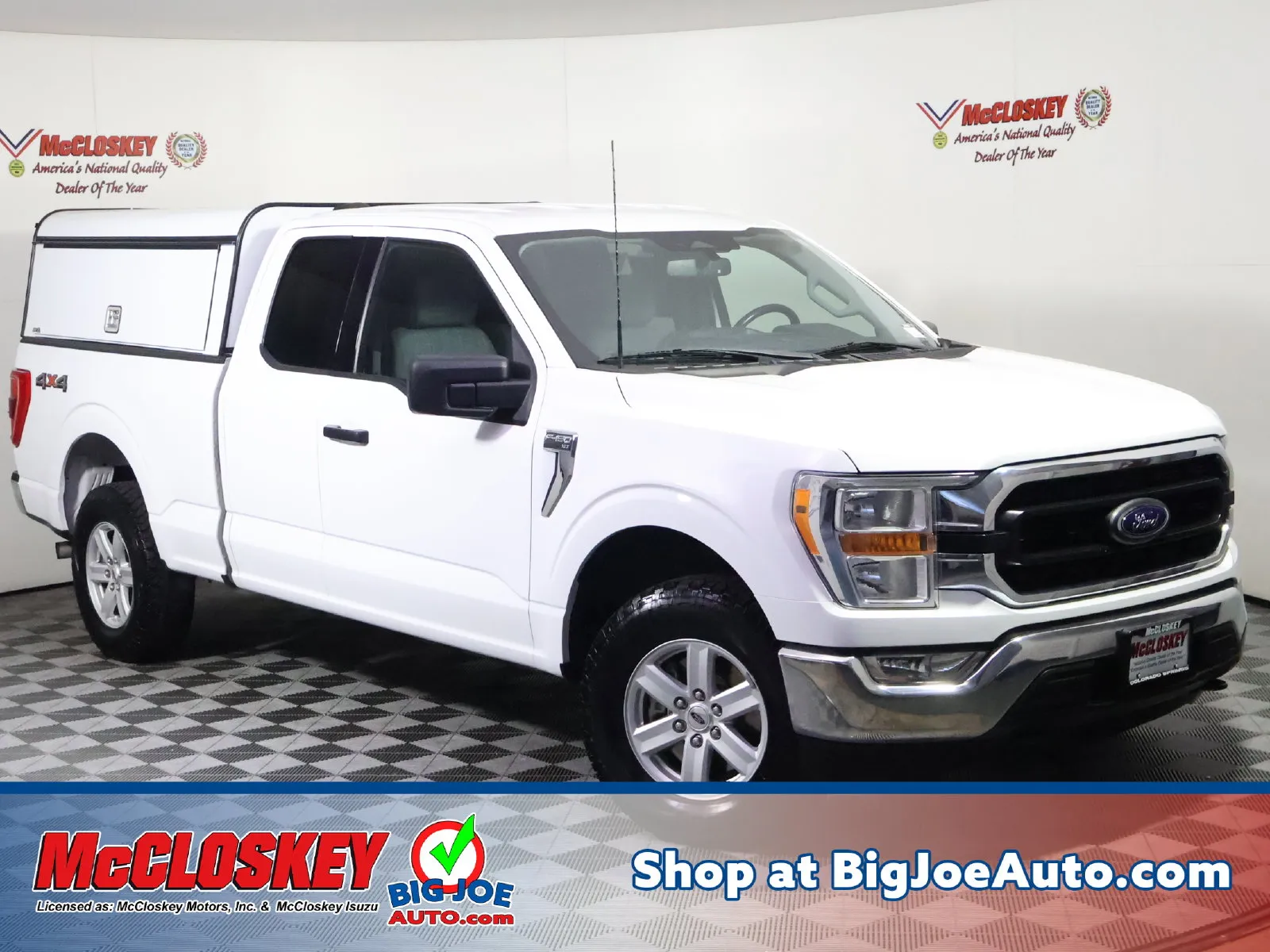
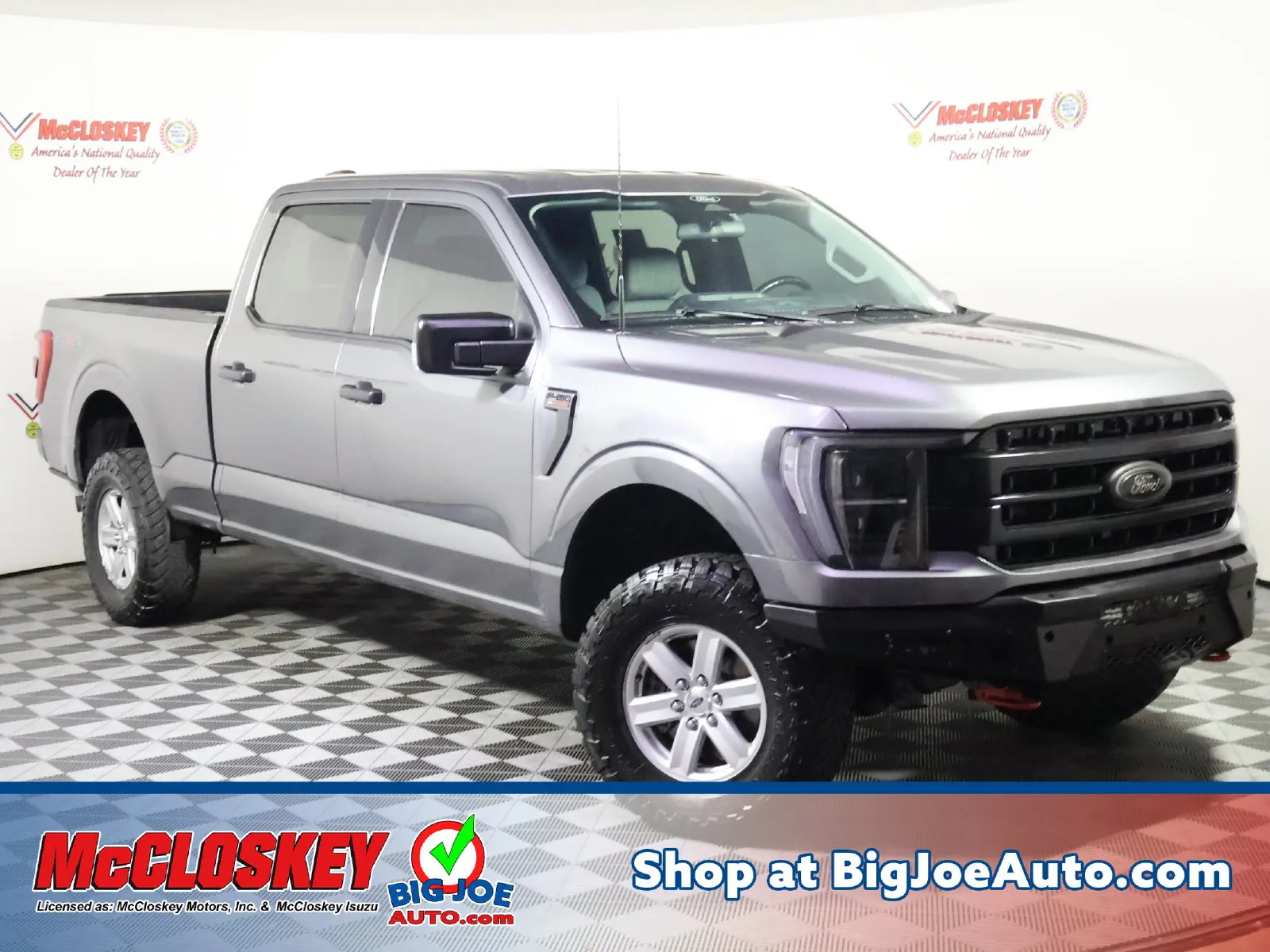
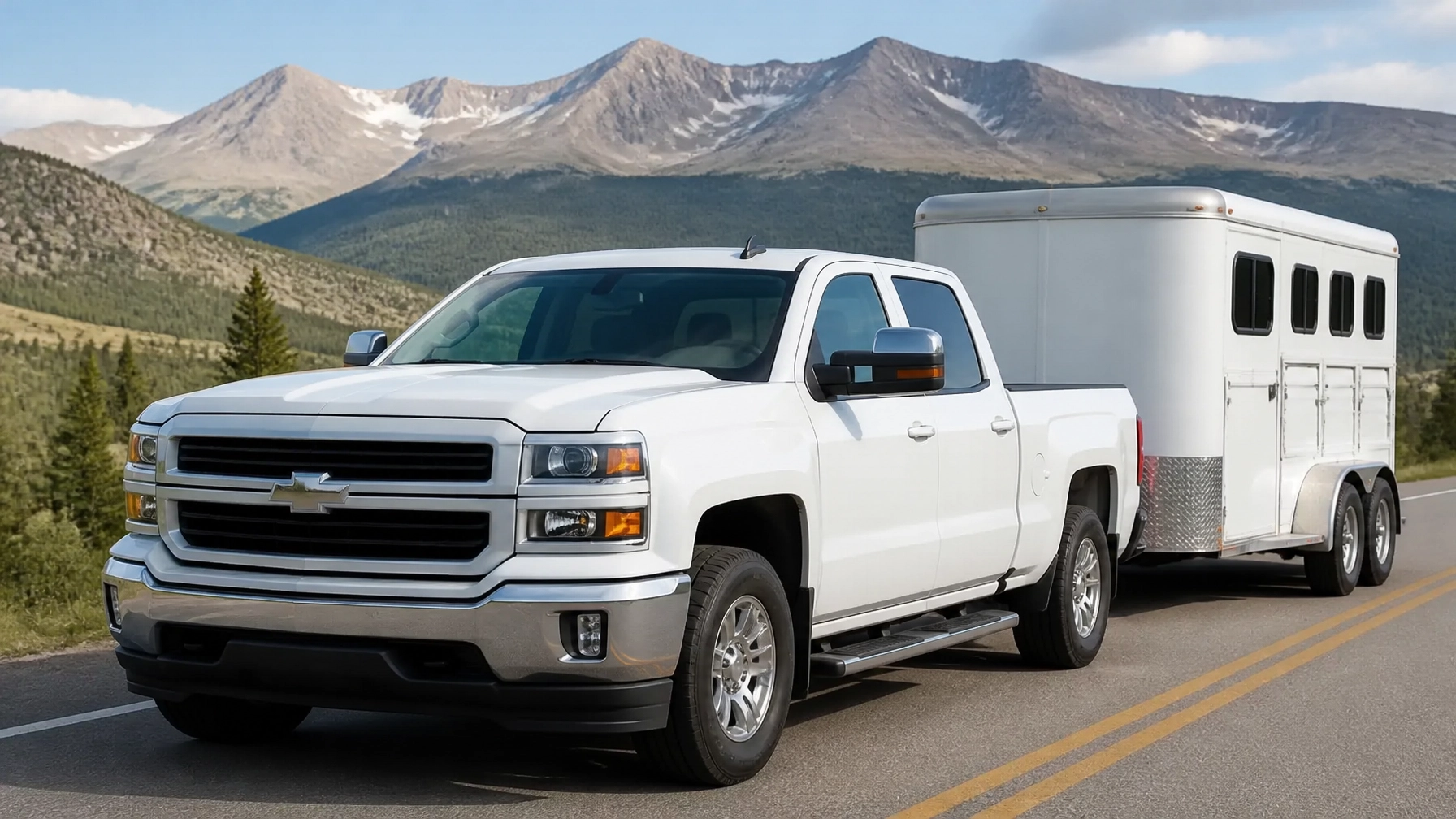
For loaded trailers around 7,000 to 10,000 pounds, a half-ton or three-quarter-ton truck is often the more suitable starting point in Colorado. A half-ton Ford F-150, Chevrolet Silverado 1500, GMC Sierra 1500, or RAM 1500 can work well when properly equipped and when its payload remains adequate after passengers and tongue weight are included. A three-quarter-ton truck may make more sense for frequent towing, heavier enclosed trailers, horse trailers, or equipment that consumes much of the payload.
Fifth-wheels, toy haulers, large livestock trailers, and heavy equipment usually move the discussion into three-quarter-ton and one-ton territory. These trucks often provide higher axle ratings, stronger cooling systems, heavier brakes, and more substantial engine-braking capability, but they can cost more to purchase, fuel, insure, and maintain. Buying more truck than you need creates its own trade-offs, especially if the vehicle will spend most of its time commuting on Academy Boulevard or carrying passengers around Fort Carson.
A practical example: choosing a Ram 2500 for a horse trailer
Consider a young woman shopping for a truck to tow a horse trailer. Instead of starting with a preferred badge or the largest available engine, she calculates the trailer’s loaded weight, estimates tongue weight, adds her passengers and tack, and considers how often she expects to travel on Colorado mountain roads. The numbers show that a half-ton truck could be close to its payload and axle limits once the trailer is loaded, even if its published tow rating appears sufficient.
She chooses a RAM 2500 because the heavier-duty platform gives her more capacity and control for the way she plans to use the trailer. That decision does not mean every horse trailer requires a three-quarter-ton truck, and it does not replace checking the specific truck’s ratings. It shows why towing capacity alone can lead buyers toward the wrong vehicle, while a complete calculation may point toward a truck that reduces the likelihood of premature wear, overheating, brake strain, or expensive repairs.
A used RAM 2500, Ford F-250, Chevrolet Silverado 2500HD, or GMC Sierra 2500HD may provide a more appropriate starting point for this type of use, depending on the trailer and configuration. Diesel power can be useful for frequent heavy towing, while a gas heavy-duty truck may make more sense for lower annual mileage and a buyer who wants to manage purchase and maintenance costs. The right answer balances capability with age, mileage, condition, features, fuel costs, and the actual frequency of towing.

Check the specific used truck before you buy
When comparing used truck dealerships in Colorado Springs, ask to review the vehicle’s exact equipment and documentation. A tow package may include a receiver hitch, wiring, trailer sway control, upgraded cooling, a brake controller, or tow-haul programming, but the contents vary by model and trim. Confirm whether the truck has the axle ratio, tires, suspension, and hitch equipment appropriate for your trailer rather than assuming every truck with a hitch has the same capability.
Review the door-jamb label for GVWR and payload information, then compare those figures with your estimated loaded combination. Inspect the frame, receiver hitch, wiring, brake controller, tires, suspension, transmission operation, cooling system, and service history. A used truck that has already spent years towing heavy loads may need closer inspection of the brakes, rear suspension, differential, transmission, and hitch mounting points.
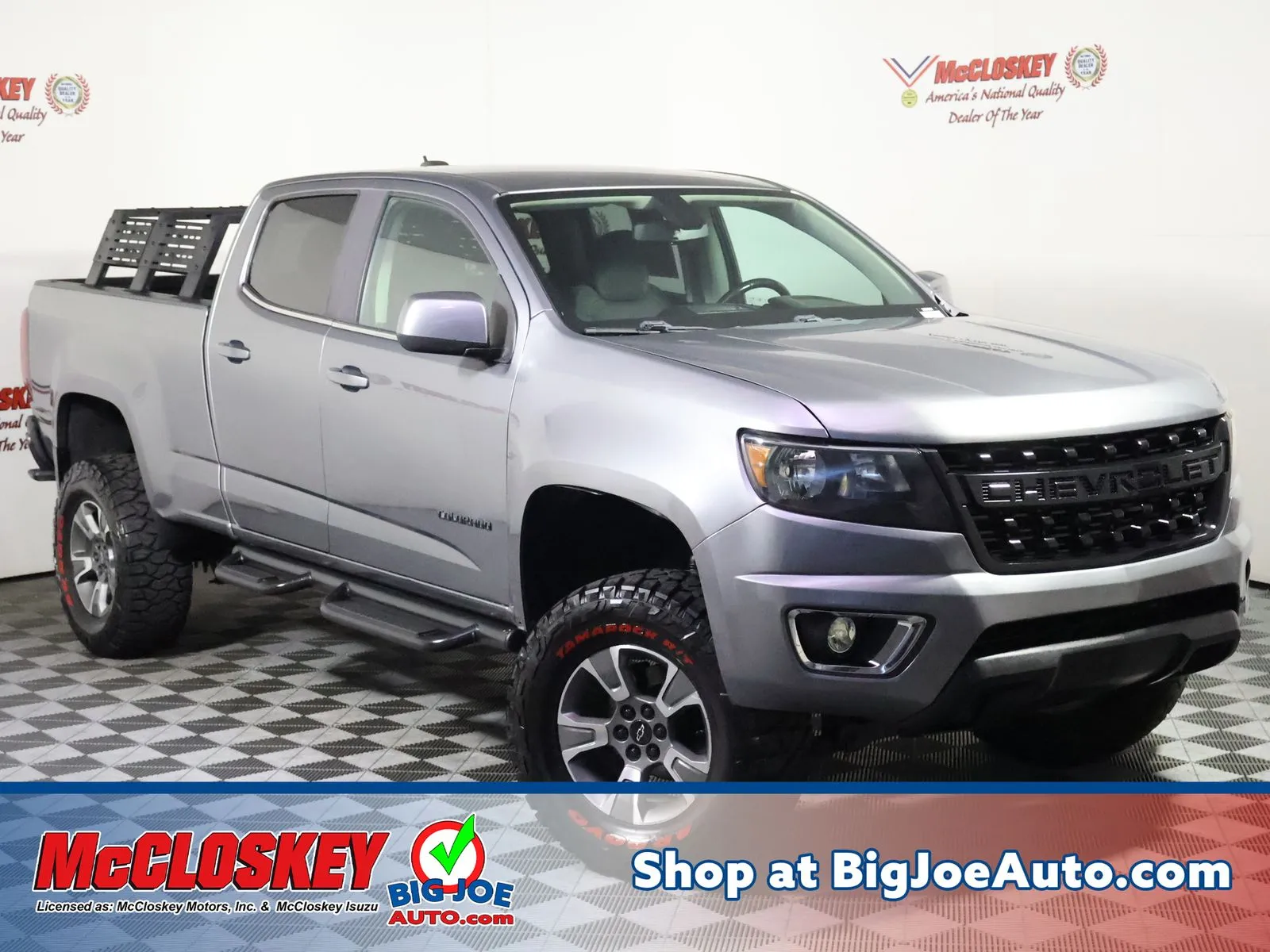
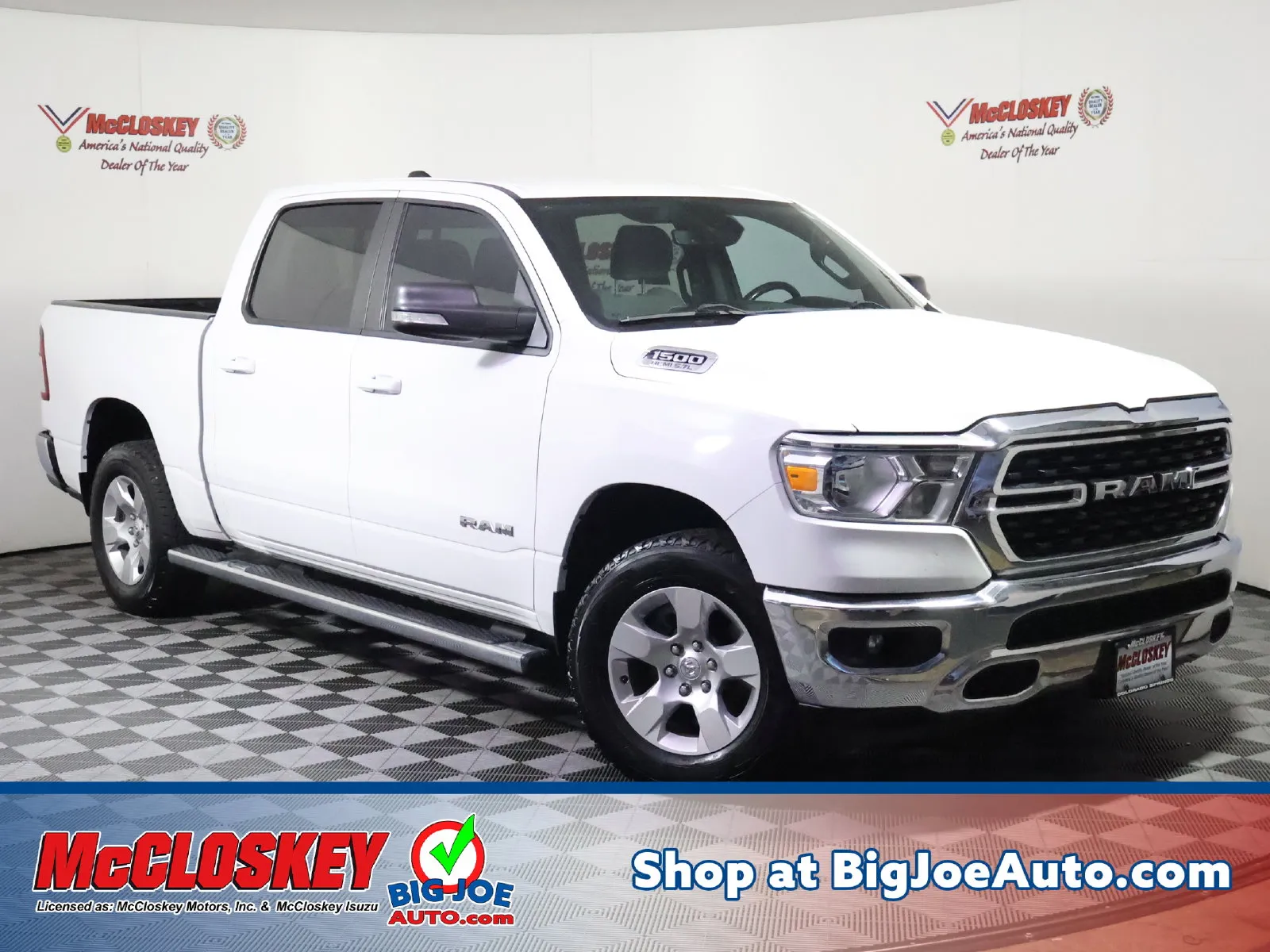
McCloskey Truck Town’s current selection includes more than 120 trucks within an overall inventory of 250-plus pre-owned cars, trucks, vans, and SUVs. Vehicles in the selection can include midsize pickups, half-ton trucks, heavy-duty models, 4WD configurations, tow packages, and work-ready setups, depending on current availability. For example, a 2024 Ford F-150 XLT and 2022 RAM 1500 Classic Tradesman illustrate why buyers should review each truck’s drivetrain, engine, tow equipment, and vehicle-specific ratings.
Qualifying vehicles may also include the McCloskey Limited Powertrain Warranty, which provides 2-month or 2,000-mile coverage on vehicles that are 10 model years old or newer, have under 120,000 miles, and use a gas engine. Exotics, high-performance vehicles, altered vehicles, and diesel vehicles are excluded, and coverage details should be confirmed for the specific truck before purchase. Our team can also help you think through trade-in value, financing, service needs, and whether a particular truck fits the job without stretching its ratings.

Questions to answer before choosing a Colorado truck for sale
Do I need a half-ton or three-quarter-ton truck for towing in Colorado?
It depends on the loaded trailer weight, tongue weight, passengers, cargo, route, and towing frequency. A half-ton may suit many travel trailers, boats, and utility trailers, while a three-quarter-ton truck may provide a more useful margin for heavier horse trailers, equipment, and frequent mountain travel. Check payload and GVWR before relying on the tow rating.
Is towing capacity more important than payload?
Neither rating replaces the other. Towing capacity addresses the trailer behind the truck, while payload addresses the weight placed on the truck, including tongue weight. A truck can have a high tow rating and still become overloaded when the trailer’s tongue weight, passengers, tools, and accessories are added.
Does altitude reduce towing capacity in Colorado?
Altitude can reduce available engine performance, particularly with naturally aspirated gasoline engines, and long grades increase heat and braking demands. The manufacturer’s rating does not disappear, but the truck may work harder at elevation. Leaving capacity headroom is useful when towing on I-70, Highway 24, Monument Hill, or roads near Pikes Peak.
Should I buy diesel for Colorado mountain towing?
Diesel can be useful for frequent heavy towing because it typically provides strong low-rpm torque and engine-braking capability, but it may not be the most practical option for occasional towing or low annual mileage. A gas heavy-duty truck or properly equipped half-ton may offer a better balance of purchase price, operating cost, and capability for some buyers.
What should I bring when shopping for a used truck?
Bring the trailer’s GVWR, estimated loaded weight, tongue weight if available, and a realistic list of passengers and cargo. Review the truck’s door label, owner’s manual, VIN history, service records, tow equipment, and axle ratings. A careful comparison helps you choose based on how the truck will actually be used rather than on a single advertised number.
The right truck for Colorado towing is the one that handles your normal trailer, cargo, passengers, and routes with room to spare while still fitting your budget and ownership plans. Visit McCloskey Truck Town’s used truck inventory in Colorado Springs or explore the selection at BigJoeTruckTown.com, where you can review available trucks, estimate trade-in value, and get pre-qualified before stopping by 5515 N. Academy Blvd. Our team can help you compare capability, mileage, age, features, warranty eligibility, and expected use so your next truck fits the work ahead.