The 20-Minute Test Drive That Tells You Everything
The 20-Minute Test Drive That Tells You Everything
When you are evaluating a Colorado pickup for sale, a quick loop around the dealership rarely tells you enough. Whether you are comparing truck sales in Colorado Springs, researching truck dealers in Colorado Springs, or visiting used truck dealerships in Colorado Springs, the test drive should follow the same sequence every time. Start with a cold engine before the salesperson warms it up, then drive the truck through city streets, highway speeds, a steep grade, and a parking lot. That route gives you opportunities to evaluate starting behavior, transmission shifting, braking, steering, suspension noise, highway stability, and everyday features. It also gives the truck enough time to reach operating temperature, which can reveal issues hidden during a five-minute drive. This checklist is designed to help you compare a Colorado pickup for sale with more confidence while recognizing when a professional inspection is appropriate.
Start with a cold engine before leaving the lot
The first three minutes begin before the truck moves. Ask to see the vehicle with the engine cold, since a pre-warmed engine may hide extended cranking, rough idle, smoke, or noise during startup. Turn the key or press the start button while listening for how quickly the engine fires, then allow it to idle without immediately raising the RPM. A healthy powertrain typically settles into a consistent idle, although the exact sound and idle speed vary by engine type, displacement, temperature, and maintenance history. Walk behind the truck and look for persistent blue smoke, thick white smoke, or an unusual fuel or oil smell. A brief vapor cloud in cold weather may be normal, but smoke that continues after the engine begins to warm deserves further evaluation.
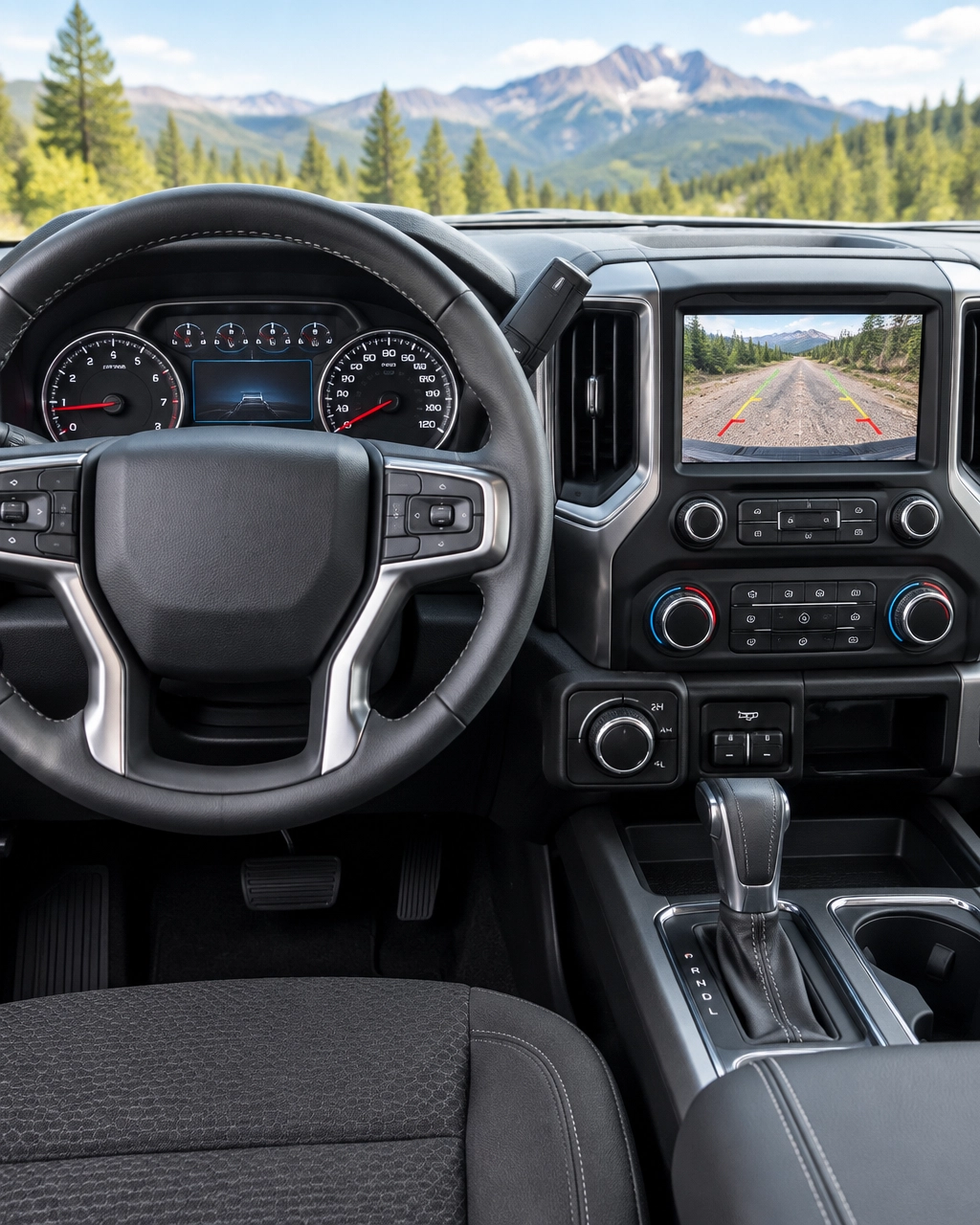
Check the instrument cluster before driving and confirm that warning lights illuminate during the initial key cycle, then go out after the engine starts. A check-engine, ABS, airbag, charging-system, or temperature warning that remains on should be documented before you continue. Pay attention to the oil pressure and temperature gauges as the truck warms, since a gauge that moves abnormally or a temperature reading that climbs under load can indicate a problem. Listen for ticking, knocking, squealing, or grinding that changes with engine speed. Some sounds are characteristic of a particular engine, while a new metallic knock or persistent belt noise warrants a technician’s opinion. Do not allow the test drive to begin until you have completed this first observation.
Cold-start checklist
- Starting behavior: The engine should start without excessive cranking or repeated attempts.
- Idle quality: Watch for a rough idle, misfire, unusual vibration, or unstable RPM.
- Exhaust: Persistent blue or thick white smoke should be investigated.
- Warning lights: Confirm that the check-engine, ABS, airbag, charging, and temperature lights do not remain illuminated.
- Fluid leaks: Look beneath the truck for fresh oil, coolant, transmission fluid, or brake fluid.
Follow the same Colorado Springs route every time
A repeatable route makes it easier to compare one truck with another. First, use surface streets for low-speed steering, braking, suspension, and transmission checks. Next, take a stretch of I-25 where traffic and conditions allow you to feel highway manners, acceleration, lane tracking, and transmission shifts at speed. Then use a safe grade such as Monument Hill to evaluate power under load, downshifts, temperature stability, and throttle response. Finally, return to a parking lot for tight maneuvering, visibility, turning radius, reverse camera operation, and bed access. The route should take approximately 20 minutes, although traffic, weather, and road conditions may require adjustments. Safety comes first, so never perform an aggressive maneuver, hard stop, or lane change when traffic or pavement conditions make it inappropriate.
Minutes 3 to 7: Surface streets and parking-lot maneuvers
As you leave the lot, evaluate steering effort and response at low speed. The wheel should respond predictably without excessive free play, wandering, unusual heaviness, or a delayed reaction when you make a small correction. Apply the brakes gently from neighborhood speeds, then make a firmer stop when traffic conditions permit. The truck should slow in a controlled manner without pulling left or right, and the pedal should feel firm rather than spongy. Over patched pavement or a controlled speed bump, listen for clunks, pops, rattles, or repeated knocking from the suspension. A single noise may require further diagnosis, while a consistent clunk can point toward worn bushings, ball joints, tie-rod ends, shocks, mounts, or other front-end components.
Shift between Park, Drive, and Reverse while stopped with your foot firmly on the brake. Engagement should occur without a long delay, harsh bang, or loud driveline clunk, although some trucks have a more noticeable engagement feel than others. During light acceleration, pay attention to the automatic transmission’s upshifts and downshifts. Hard shifts may indicate a transmission concern, worn mounts, incorrect fluid level, or a calibration characteristic that needs to be verified. Hesitation can relate to throttle response, fuel delivery, ignition, turbocharger operation, or transmission behavior, depending on the truck. Make a few tight turns in a parking lot at low speed, listening for clicking, popping, or binding, then test reverse visibility and the backup camera before moving to faster roads.
Use I-25 and Monument Hill to evaluate the truck under load
Highway driving reveals issues that do not appear around the block. On an I-25 on-ramp or another suitable stretch of road, accelerate smoothly to the legal speed while observing whether the truck responds without hesitation, surging, misfire, or an unexpected loss of power. At cruising speed, maintain a firm grip on the wheel and assess whether the truck tracks straight without wandering. A vibration through the steering wheel or seat may come from tire balance, wheel condition, driveline components, suspension wear, or a combination of issues. Notice whether the truck feels stable over pavement changes or continues bouncing after a dip, since excessive float can indicate worn shocks. Also listen for a vibration that appears only during acceleration, coasting, or braking, because the timing helps narrow the possible source.
A grade such as Monument Hill provides a useful Colorado test because it places more demand on the engine, cooling system, transmission, and brakes. The truck should maintain speed with reasonable throttle input, and the transmission should downshift without repeated hunting, harsh engagement, or a flare in engine RPM. Hesitation under load may indicate an engine, fuel, ignition, turbocharger, or transmission issue, while knocking under load should not be dismissed as normal without inspection. Watch the temperature gauge as you climb and confirm that it remains stable rather than creeping upward. On the descent, allow the transmission to manage speed when appropriate and feel for clean downshifts without a heavy driveline bang. If the truck has tow/haul mode, test it on a suitable grade and compare the shift behavior with the normal drive mode.
What common symptoms may indicate
- Hard shifts: Could relate to transmission wear, fluid condition, mounts, calibration, or a driveline issue.
- Hesitation: May point to fuel delivery, ignition, throttle response, turbocharger operation, or transmission behavior.
- Vibration at speed: Often requires checking tires, wheels, alignment, suspension, U-joints, driveshafts, and other driveline components.
- Pulling under braking: May indicate uneven brake force, a sticking caliper, tire concerns, alignment problems, or suspension wear.
- Clunks over bumps: Can come from worn shocks, bushings, ball joints, tie rods, mounts, or loose components.
- Warning lights: An illuminated check-engine, ABS, airbag, charging, or temperature light should be diagnosed before purchase.
Test the features you will actually use
A truck can drive well while still having a feature that does not work correctly. If you need four-wheel drive (4WD), ask how the system should be engaged and test it only in a suitable location and mode according to the manufacturer’s instructions. Do not force a part-time 4WD system into a mode that is not intended for dry pavement. Test tow/haul mode if you regularly pull a trailer, but focus on whether it changes shift timing and engine braking in a predictable way rather than treating the button as a guarantee of towing capability. Run the air conditioning at idle and while driving, since weak cooling may become more apparent once the truck is warm. Check the backup camera, parking sensors, lights, wipers, power windows, locks, seat adjustments, and infotainment system.
The bed deserves the same attention as the cab. Open and close the tailgate, check the bed liner or flooring for damage, inspect tie-down points, and confirm that the access height works for your equipment. If you expect to carry tools, a motorcycle, landscaping materials, or a fifth-wheel or gooseneck setup, look carefully at the bed length, hitch configuration, payload information, and available clearance. A short-bed truck may be easier to maneuver around Colorado Springs and Monument, while a long bed may provide better utility for work equipment. Buyers considering a commercial configuration can also review available Butler flatbed options when a standard pickup bed does not fit the job.
Compare more than one truck back to back
One test drive gives you information, but driving two or three similar trucks on the same route gives you context. Differences in steering effort, brake pedal feel, transmission response, road noise, seat comfort, and suspension control become easier to identify when the route and conditions remain similar. McCloskey Truck Town maintains an inventory of 250-plus pre-owned vehicles, including more than 120 trucks on the lot, so buyers may have the opportunity to compare configurations rather than making a decision from one short drive. Available vehicles change, but the current used truck inventory can help you identify models, cab styles, bed lengths, and drivetrain layouts before visiting.
A test drive also should be paired with a vehicle history review, a visual inspection, and a professional assessment when the truck’s condition or history raises questions. Our service center can help with inspection and maintenance needs after purchase, while the McCloskey Limited Powertrain Warranty may apply to qualifying vehicles. The warranty covers qualifying gas-engine vehicles that are 10 model years or newer and have fewer than 120,000 miles; coverage includes the engine, transmission, transfer case, and differential. Exotics, high-performance vehicles, altered vehicles, and diesel vehicles are excluded, and the specific vehicle and terms should be confirmed before purchase.
Frequently asked questions about testing a used truck
Should I insist on a cold start when test-driving a used truck?
Yes, when practical. A cold start can reveal extended cranking, rough idle, abnormal smoke, and noises that may be less noticeable after the engine has warmed. It is also useful to ask whether the truck has recently been started, then confirm the answer by checking engine temperature and allowing the vehicle to idle before driving.
How long should a used truck test drive take?
Plan for at least 20 minutes when traffic and weather allow. The truck should experience low-speed streets, highway speed, a grade, braking, turns, and a final parking-lot check. A longer drive may be appropriate for a complex work truck, but the route should always remain safe and legal.
What should I do if the truck has a warning light?
Ask the salesperson to document the warning light and determine whether the issue has already been diagnosed. Do not assume that clearing the light resolves the underlying problem, since a scan may show stored or pending codes even when the dashboard appears normal. A vehicle with a persistent safety-system or powertrain warning should receive additional evaluation before you make a purchase decision.
Can a test drive replace a pre-purchase inspection?
No. A test drive evaluates operation under specific conditions, but it cannot fully identify frame damage, leaks hidden by covers, underbody corrosion, previous repairs, or components that require a lift. Combine the drive with a vehicle history review and an inspection by a qualified technician, particularly when buying a higher-mileage truck or a vehicle intended for towing.
Use the same 20-minute route for every Colorado pickup for sale you consider, record what you notice, and compare symptoms rather than relying on one impression. When you are ready to review available trucks, you can browse BigJoeTruckTown.com, use the online pre-qualification tool, review trade-in information through the trade-in value tool, or stop by McCloskey Truck Town at 5515 N Academy Blvd in Colorado Springs, CO.