What to Check Underneath a Used Truck Before You Buy
What to Check Underneath a Used Truck Before You Buy
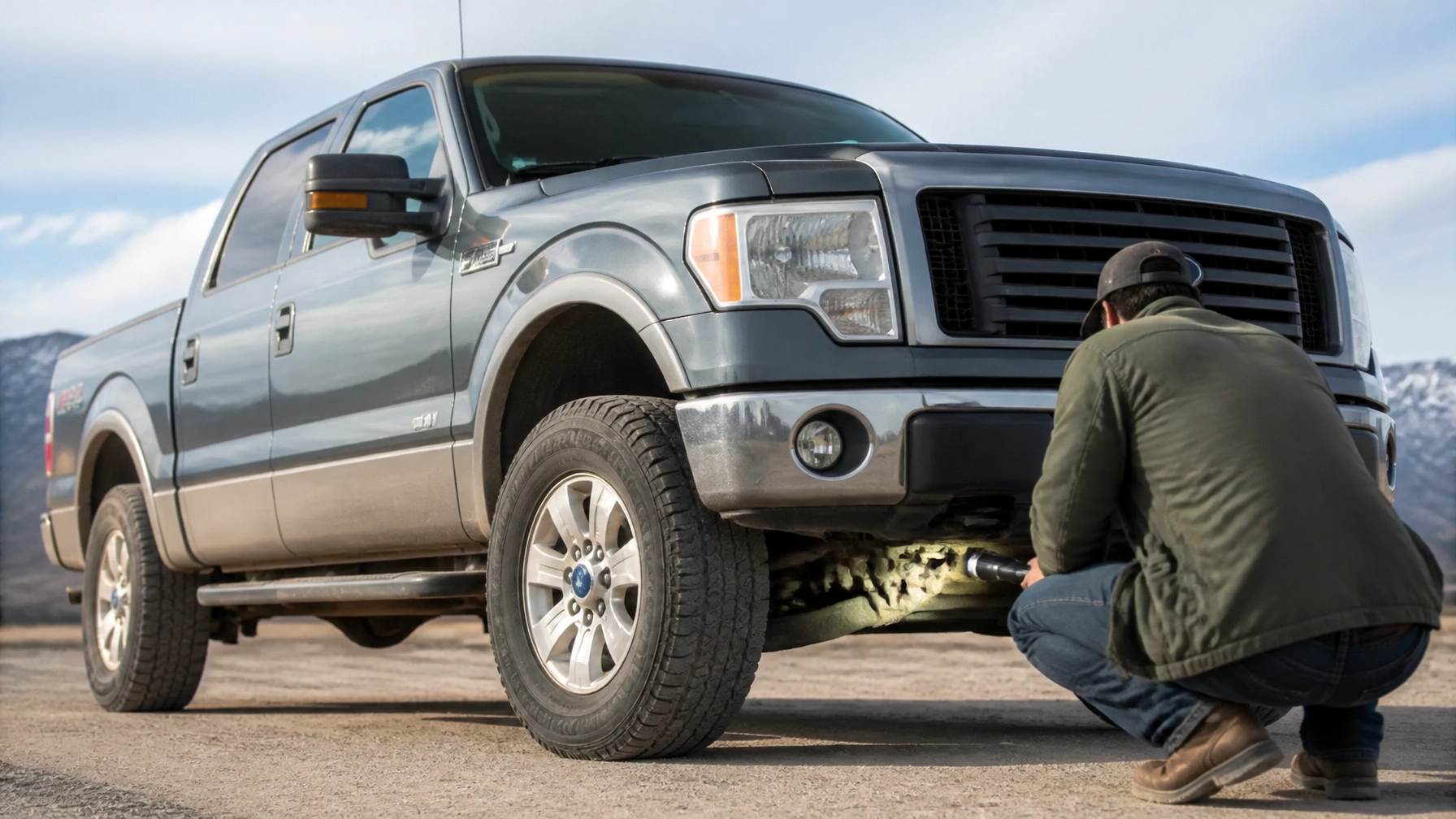
A used truck can look clean from the curb and still carry expensive problems underneath. Before you commit to a Colorado truck for sale, inspect the frame, suspension, drivetrain, brake lines, exhaust, and signs of previous repairs that may not appear during a quick walk-around.
This guide explains what to check under a used truck, how a test drive can confirm what you see, and when to ask for a professional inspection. These steps apply whether you are comparing truck sales in Colorado Springs, searching for a Colorado pickup for sale near Pueblo, or visiting truck dealers in Colorado Springs for a work-ready vehicle.
Start with the frame because structural condition affects everything else
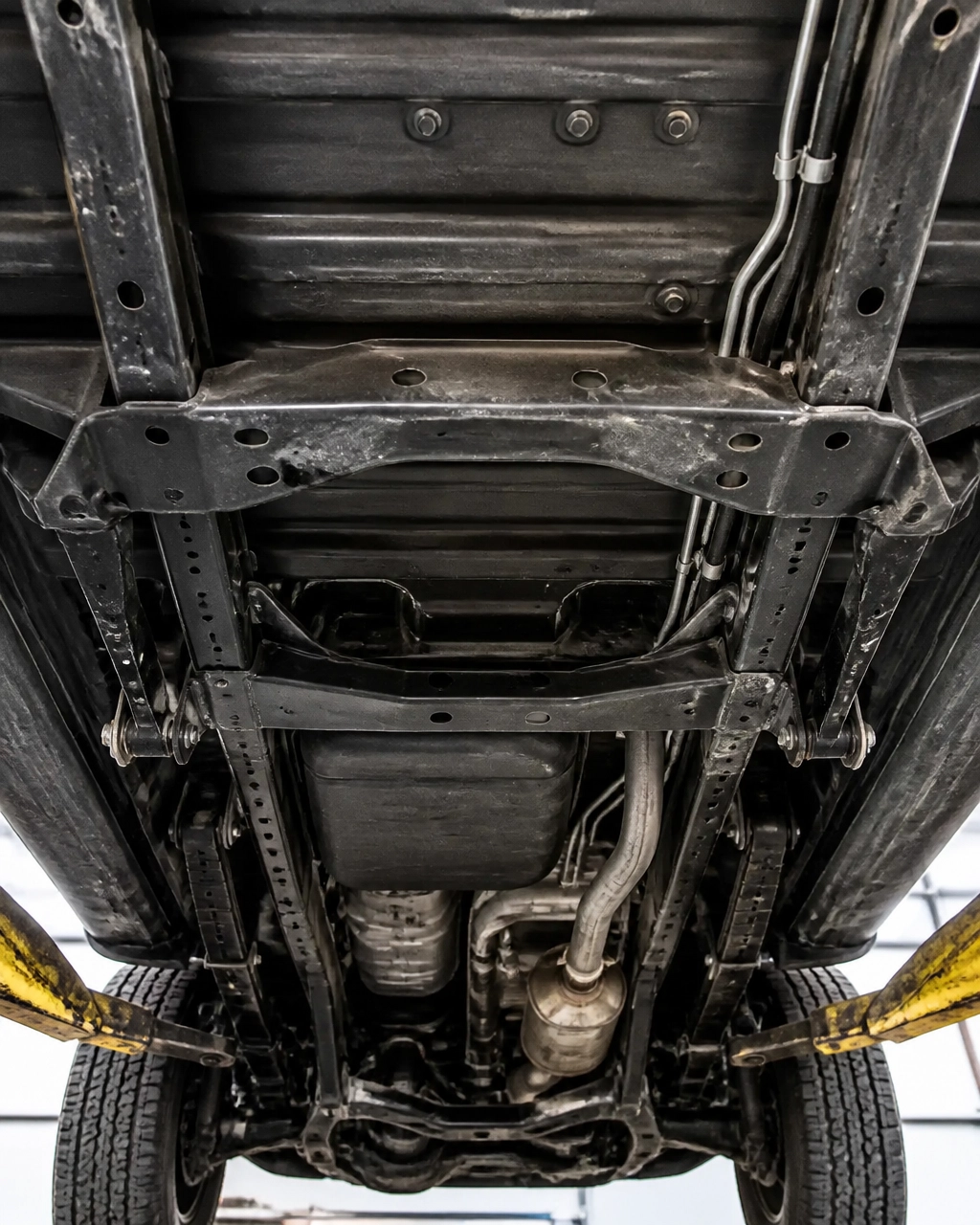
The frame rails carry the cab, bed, suspension, drivetrain, and towing loads, so they should be the first major inspection point. Look along both rails from the front bumper to the rear axle, then examine the crossmembers, suspension mounts, cab mounts, and hitch area. The metal should appear straight and consistent, without obvious bends, cracks, crushed sections, or sections that look twisted compared with the opposite side.
Light surface discoloration may be normal on an older truck, but deep scaling requires more attention. Be cautious if the frame has layered rust, holes, flaking sections, or metal that appears swollen around a mount. Rust near the suspension brackets, steering components, spring hangers, and rear frame ends can affect safety and repair costs more than surface corrosion on a less critical bracket.
Signs of previous collision repairs may include non-factory welds, reinforcement plates, unusual brackets, fresh black coating in one isolated section, or a frame finish that does not match the surrounding metal. Look at the bed-to-cab alignment and the gaps around the doors, hood, and tailgate as well. Uneven gaps, doors that bind, or a tailgate that does not close smoothly may support concerns about past structural damage, although body alignment can also be affected by ordinary wear or previous panel work.
A flashlight helps you see behind shields and around crossmembers, but avoid striking the frame or scraping aggressively unless the seller permits it. If you see a bent rail, cracked weld, major patch, or structural rust, ask for evaluation by a qualified frame or repair professional before discussing price.
Colorado rust deserves a closer look around the frame and hardware
Colorado does not have the same salt exposure as every northern state, but winter road treatment, moisture from snow, mountain weather, and repeated temperature changes can still accelerate corrosion. A truck that has spent time around Colorado Springs, the Palmer Divide, mountain communities, or salted roads may show rust in places that are easy to overlook. Pay close attention to the underside of the frame, fasteners, brake and fuel lines, exhaust components, leaf spring hangers, and hitch receiver.
Surface rust on bolts and brackets does not automatically disqualify a truck. The concern increases when rust is deep, flaky, perforated, or concentrated around a load-bearing connection. Look for areas where the metal layers are separating, where a screwdriver could penetrate weak material, or where a coating appears to be lifting away from the frame. Rust around suspension mounts and brake lines deserves more attention than cosmetic corrosion on an exhaust heat shield.
Fresh undercoating can make inspection more difficult. It may represent legitimate corrosion protection, but a new coating applied only to one section can also conceal repairs or rust. Ask whether the vehicle has lived in Colorado its entire life, whether it came from another region, and whether service records show undercarriage repairs. The goal is not to reject every truck with visible corrosion, but to understand whether the rust is cosmetic, repairable, or structural.
Check for fluid leaks from the engine, transmission, and differentials
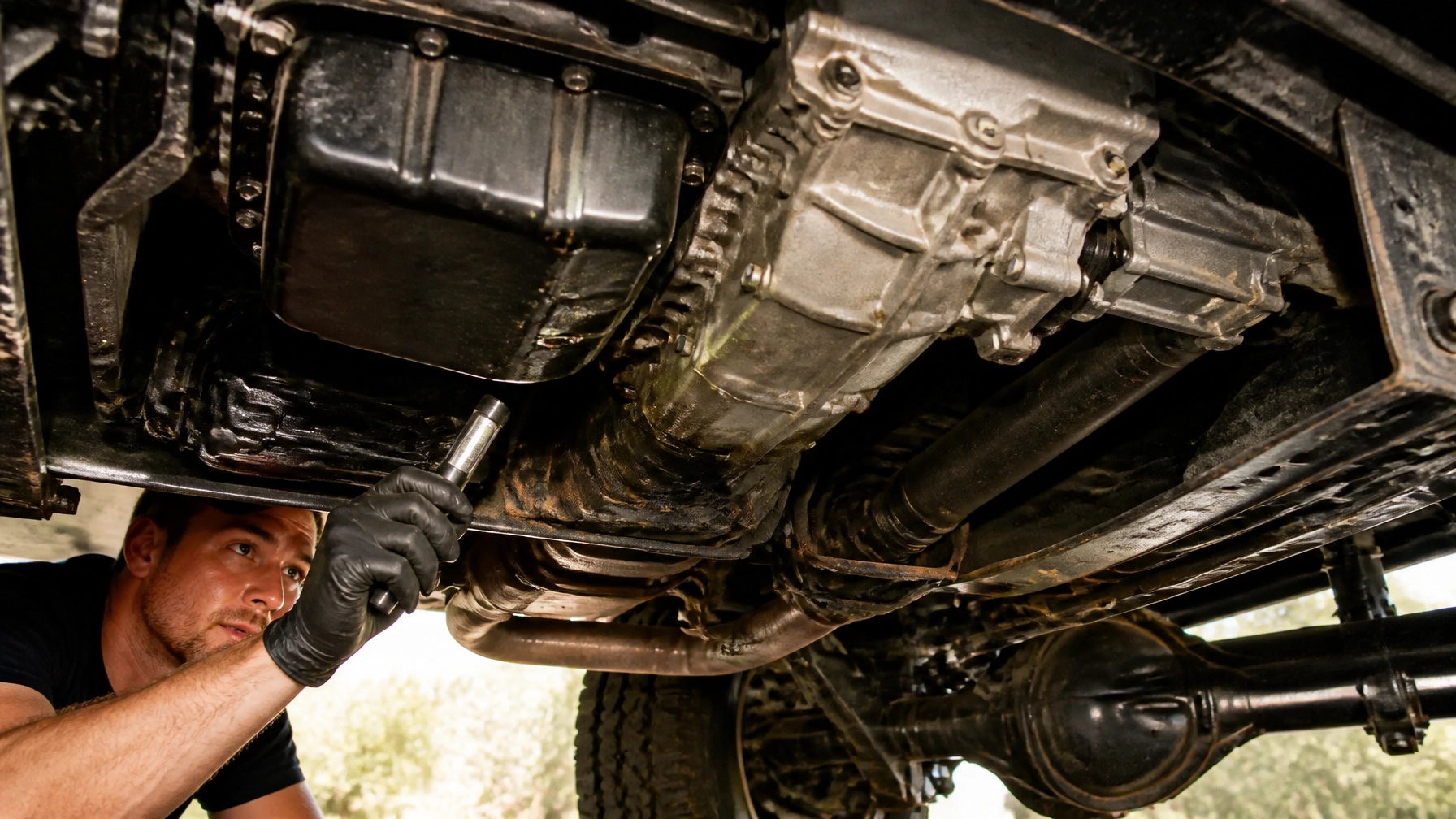
The underside can reveal leaks that are difficult to see from above. Start at the engine oil pan and work rearward toward the transmission, driveshaft, transfer case, and differentials. A dry, dusty film may reflect an old seep that is no longer active, while fresh wet fluid, a growing drip, or a broad area covered in oil indicates a problem that needs diagnosis.
Engine oil: Inspect the oil pan, drain plug, timing cover area, and rear of the engine. Oil around the rear of the engine may require more investigation because it can come from several different seals or gaskets.
Transmission fluid: Check the transmission pan, case, cooler lines, and connection points. Red, brown, or dark fluid may indicate a leak, but fluid color varies by vehicle and service history, so the location and amount matter more than color alone.
Coolant: Look for colored residue, damp areas, or crusty deposits around hoses, the radiator, water pump area, and lower engine components. Coolant leaks may appear small when the truck is parked and become more serious under pressure or operating temperature.
Transfer case and differential fluid: Four-wheel-drive trucks require inspection of the transfer case, front differential, rear differential, axle seals, and pinion areas. Gear oil often has a strong odor and may collect dirt around a leaking seal.
The absence of a puddle does not prove that the truck has no leak. Some leaks only appear after the drivetrain reaches operating temperature, so combine the underbody inspection with a test drive and a second look afterward.
Suspension wear can affect steering, tire life, and mountain-road control
Colorado Springs drivers deal with potholes, uneven pavement, steep grades, winter traction changes, and gravel roads leading toward the foothills. Those conditions place regular demands on ball joints, control arm bushings, tie-rod ends, sway bar links, shocks, leaf springs, and suspension mounts.
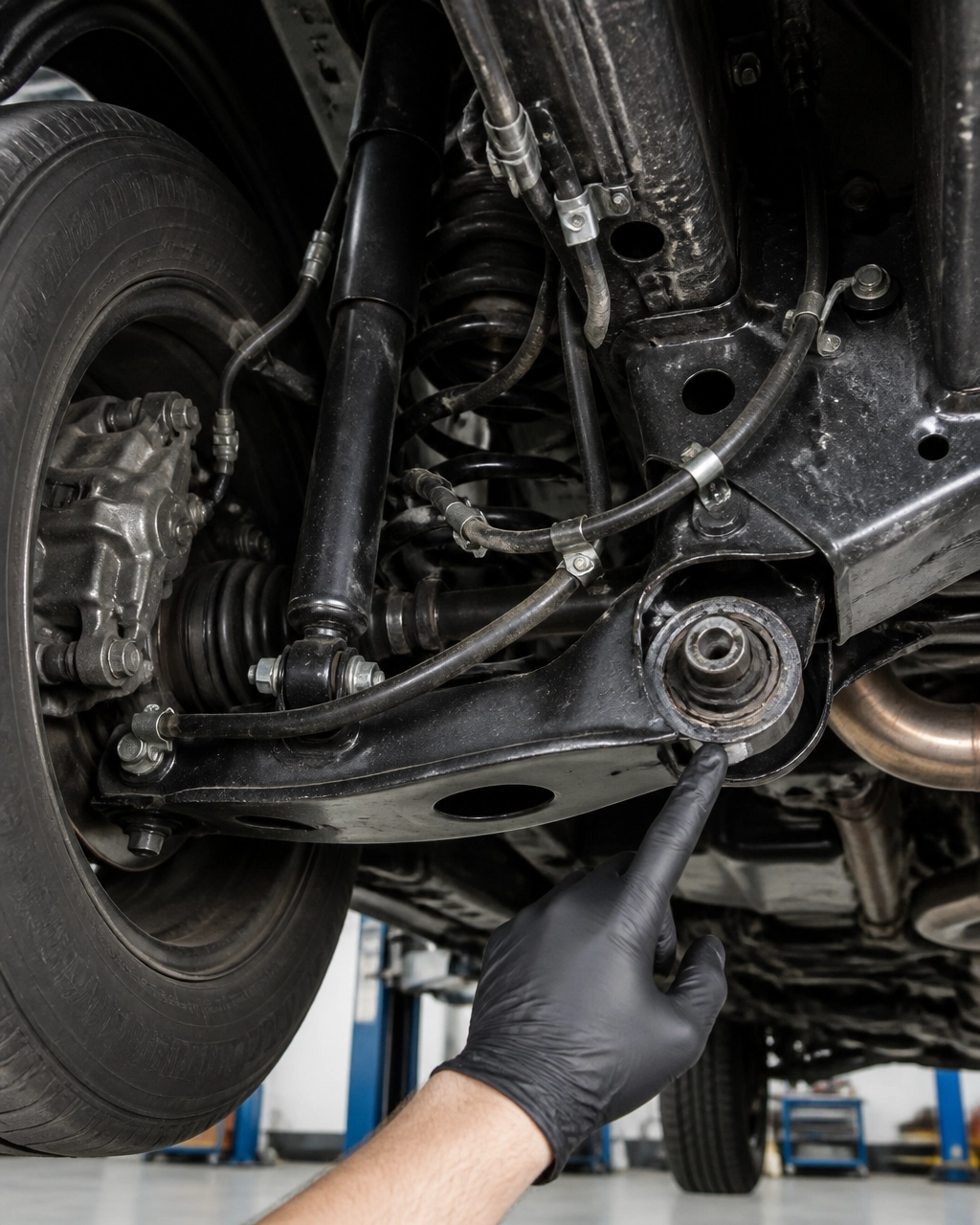
Look for cracked, split, or missing rubber in the bushings, shiny areas where parts have been contacting one another, and shock absorbers with a heavy oil film. A shock that is visibly wet or damaged may not control the truck properly over dips and rough pavement. On trucks with leaf springs, inspect the leaves for cracks, shifted sections, heavy scaling, and damaged shackles or hangers.
During the walk-around, compare the left and right sides. A truck sitting noticeably lower on one corner may have a damaged spring, a suspension problem, or an uneven load. Uneven front tire wear can also suggest alignment issues, worn steering parts, bent components, or incorrect tire pressure. During the test drive, listen for clunks over bumps and pay attention to steering wander, vibration, pulling, or a steering wheel that does not return naturally after a turn.
Do not overlook brake lines, exhaust components, and hidden repairs
Brake lines run along the frame and can corrode before the larger frame sections show serious damage. Look for deep pitting, swollen areas, flaking metal, wetness, or lines that have been replaced with unevenly routed sections. Flexible brake hoses should not appear cracked, stretched, or twisted. Because brake-line failure is a safety concern, heavy corrosion should be evaluated before purchase rather than treated as a minor cosmetic issue.
Inspect the exhaust from the manifolds or downpipes to the catalytic converters, muffler, and tailpipe. Surface discoloration is common, but holes, loose hangers, cracked welds, missing heat shields, or excessive soot can point to needed repairs. A modified exhaust may also affect emissions compliance, noise, and future service requirements, depending on the truck and its use.
Hidden repairs can show up through mismatched fasteners, fresh welds, replacement brackets, new undercoating, and components that look substantially newer on one side. Check the spare-tire carrier, trailer hitch, bed supports, and bumper mounts because work trucks may have been used for towing, hauling, or job-site duty. These uses are not automatically negative, but they make the condition of the frame, suspension, cooling system, and drivetrain more important.
Use the test drive to confirm what the underside is telling you
A walk-around underneath the truck can reveal a lot, but the test drive adds information that a flashlight cannot provide. Start with a cold start if possible and listen for unusual exhaust noise, belt noise, drivetrain clunks, or delayed engagement. Accelerate gradually, apply the brakes at different speeds, and drive over a controlled section of uneven pavement.
Pay attention to vibration through the seat or steering wheel, a truck that pulls under braking, humming that changes with speed, or clunks when shifting between drive and reverse. If the truck has 4WD, confirm that the system engages according to the manufacturer’s operating instructions and that there are no warning lights. After the drive, look underneath again for fresh fluid, new drips, or heat-related odors.
A vehicle history report and a vehicle identification number, or VIN, check can add useful context, but neither replaces a physical inspection. Maintenance records may show when suspension, brake, drivetrain, or cooling-system work was completed. If you are considering a heavy-duty truck, a diesel, or a vehicle intended for regular towing, a pre-purchase inspection by a qualified technician can be a practical final step.
McCloskey Truck Town can walk you through the inspection process
At McCloskey Truck Town, our team inspects vehicles and can walk buyers through the areas that deserve attention before they make a decision. Our selection includes 250-plus pre-owned vehicles, with more than 120 trucks on the lot, so buyers can compare different frame styles, drivetrains, bed lengths, mileage ranges, and use cases in one place.
Qualifying vehicles may include the McCloskey Limited Powertrain Warranty, which provides two months or 2,000 miles of coverage for eligible gas-engine vehicles that are 10 model years or newer and have under 120,000 miles. Coverage includes the engine, transmission, transfer case, and differential. Exotics, high-performance vehicles, altered vehicles, and diesel vehicles are excluded, so ask our team to confirm the coverage and qualifications for the specific truck you are considering.
You can browse used trucks in Colorado Springs or review the broader inventory at BigJoeTruckTown.com before visiting. Our team is available at 5515 N Academy Blvd, Colorado Springs, CO 80918, and can help you compare what you see underneath the truck with the vehicle’s intended use, maintenance history, and ownership support.
Used truck underside inspection checklist
- Frame rails and crossmembers: Look for bends, cracks, holes, deep scaling, and non-factory welds.
- Rust: Pay close attention to suspension mounts, brake lines, fuel lines, hitch areas, and frame joints.
- Fluid leaks: Check the engine, transmission, transfer case, differentials, axle seals, and coolant system.
- Suspension: Inspect ball joints, bushings, shocks, leaf springs, shackles, and mounting brackets.
- Exhaust: Look for holes, loose hangers, cracked welds, missing shields, and excessive soot.
- Brake lines: Watch for pitting, swelling, wetness, and uneven replacement routing.
- Hidden repairs: Compare both sides for mismatched parts, fresh coating, patches, and unusual brackets.
- Test drive: Listen for clunks, vibration, pulling, delayed engagement, and drivetrain noise.
The right used truck should fit your work, family, and Colorado driving needs without leaving major underside questions unanswered. Review the inspection points before visiting truck dealerships in Colorado Springs, then stop by McCloskey Truck Town to examine available trucks with our team. For financing information, you can also start online pre-qualification or review your trade-in value before your visit.